

Jo Nesbø Before Harry Hole: Footballer, Stockbroker, Rock Star
Before Jo Nesbø became one of the world’s bestselling crime writers, with more than 50 million books sold in over 50 languages, he lived three other lives. He was a footballer with dreams of playing in England. He spent a decade crunching numbers in the stock market. And he became a pop-rock frontman whose band topped the Norwegian charts. The Harry Hole novels only came later — and the road to them ran through all three careers.
The footballer whose dream ended at eighteen
Nesbø played football for Molde FK in Norway’s top flight, the premier league, at a time when he genuinely believed he could make it as a professional. His ambition was specific and grand: he wanted to play for Tottenham Hotspur in England. That dream died when he tore the cruciate ligaments in his knee at eighteen, an injury that ended his playing career before it had properly begun.
For a young man whose identity was built around sport, the loss was enormous. Years later, in a newspaper interview, he would describe himself as having once been set for football stardom until the knee gave out. What happened next defined a pattern in his life: when one door closed, he walked through another with total commitment. He completed three years of military service, then headed to business school in Bergen to study economics and business administration.
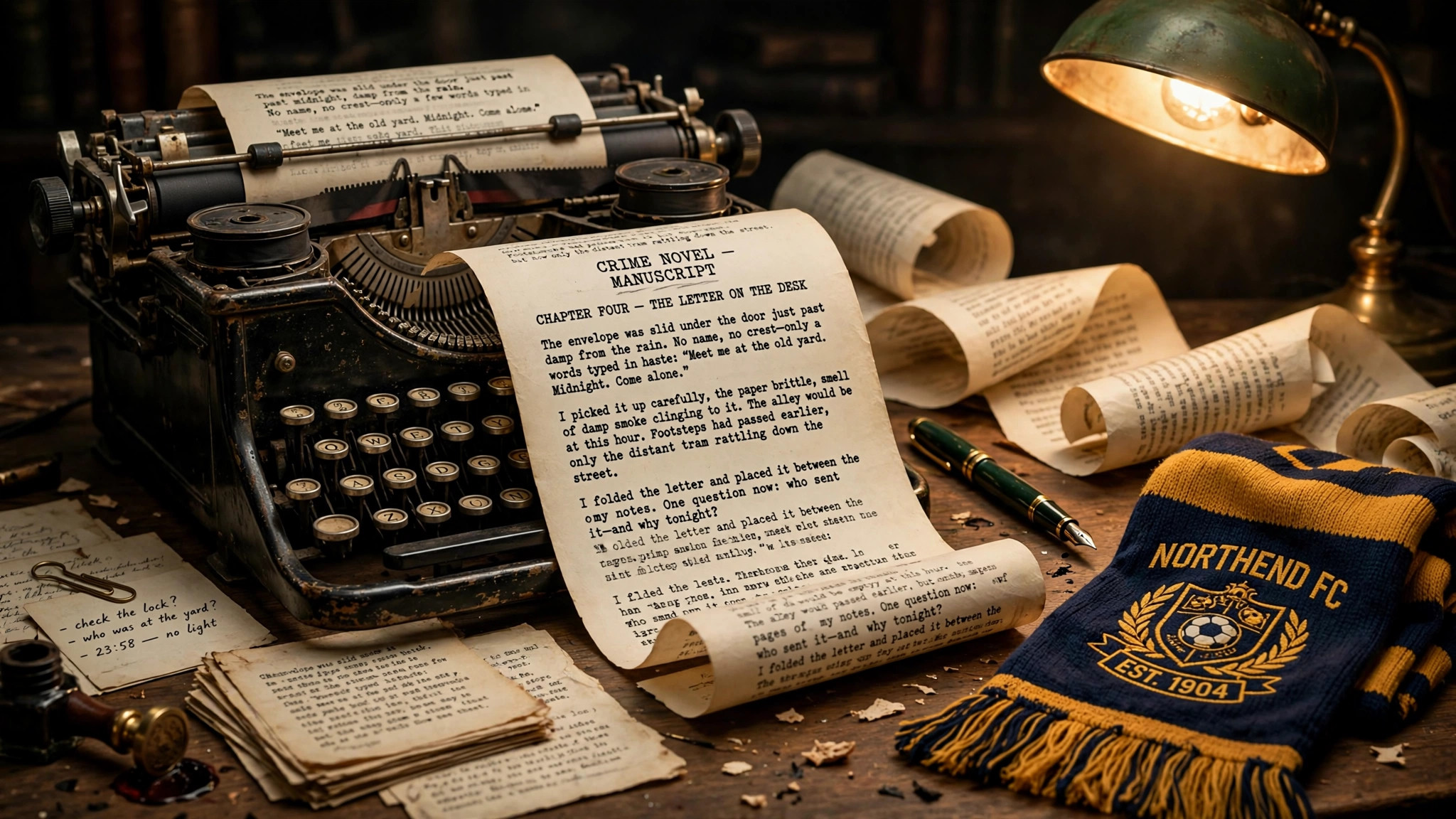
Numbers by day: a decade as a stockbroker
After business school, Nesbø spent roughly ten years working in finance — as a stockbroker and financial analyst in Oslo. This is the career almost nobody associates with him now, which is strange, because it lasted longer than his football career and his early music career combined. By day he analyzed markets and traded numbers; by night he gigged with his band.
The finance years shaped his fiction in quiet ways. The Harry Hole books are full of Oslo’s moneyed worlds — property developers, financiers, and the kind of corporate crime that a former analyst would understand from the inside. There is a cold, systems-level view of how money moves through a city in novels like The Leopard and Phantom that feels written by someone who has sat on the other side of the spreadsheet.
It also shaped his working method. Nesbø has described himself as someone who approaches writing with the same methodical persistence he once applied to markets: research deeply, commit fully, and trust the process. He was, by his own account, never the most naturally gifted at anything — not football, not music, not writing — but he was willing to work harder than everyone else. The stockbroker’s patience with long, uncertain outcomes became the novelist’s patience with a 500-page manuscript.
The rock star: Di Derre and the school of songwriting
While working in finance, Nesbø formed the band Di Derre — the name means roughly “Them There” — and became its lead singer and principal songwriter. The band’s second album went to the top of the Norwegian charts, and Di Derre became one of the country’s most popular pop-rock acts. Even as his novels conquered the world, Nesbø kept gigging, fronting the band on stage and playing shows as large as outdoor concerts with the Oslo Philharmonic near the Holmenkollen ski jump.
He has repeatedly said that songwriting was his real school as a writer. “Basically I’m a storyteller,” he told one interviewer. “Before I wrote crime stories I wrote lyrics for my band — that was my school of writing.” The discipline of compressing a narrative into three minutes of verse and chorus taught him economy, rhythm, and the art of the hook — skills that translate directly into chapter endings that make readers unable to put a book down.
The band years also gave him something rarer: a public life to draw on. Harry Hole’s battered romanticism, his barstool wisdom, the way he talks to strangers at closing time — much of that observational material was gathered on tour, in green rooms and late-night venues. When a publisher eventually asked Nesbø to write a memoir about life on the road with his band, the offer made complete sense. What happened instead became literary legend.
The flight to Sydney that created Harry Hole
The publisher commissioned a memoir. Nesbø, flying from Oslo to Sydney, found himself unable to write it — and instead, somewhere over the long flight, the figure of Harry Hole walked into his head. He arrived with the plot of his first crime novel rather than a rock-star memoir. The Bat, published in 1997, introduced the alcoholic, brilliant Oslo detective to the world.
It is one of the great origin stories in modern publishing, and it explains why Nesbø’s crime fiction feels different from the genre’s Scandinavian norm. He did not come to writing through journalism or academia. He came through sport, finance, and rock music — through arenas where performance is public and failure is visible. Harry Hole is, in a sense, the sum of those lives: the physical courage of the footballer, the analytical mind of the stockbroker, and the wounded romanticism of the rock frontman.
Even the self-deprecation fits. Asked by an interviewer whether he had ever failed at anything — given the improbable string of careers — Nesbø laughed and said: “I was a really bad taxi driver. I only collided twice, but it was one time too many.” Between the listed careers, he had apparently also driven a cab. The list of former lives keeps growing.
The children’s books and the jukebox of stories
There is one more career on the list: children’s author. Nesbø’s Doctor Proctor’s Fart Powder series, aimed at young readers, was inspired by his daughter Selma, who as a child would demand stories and supply the ingredients — a princess, a mad professor, a potato, a dinosaur — while he improvised around them. “I was like a jukebox of stories,” he said, “and she would push the button.”
The children’s books are a useful reminder that the crime novels, for all their darkness, are written by a natural entertainer. The same man who writes about Oslo’s serial killers also writes about fart powder. The songwriting instinct — set up the verse, land the chorus — runs through both.
Why the old lives still matter
Nesbø went into writing relatively late, at thirty-seven, after a decade in finance and years on stage. In an industry obsessed with young prodigies, his career is proof that a writer can be made, not just born — assembled from the raw material of other lives. The footballer gave him a body. The stockbroker gave him a mind. The rock star gave him a voice. Harry Hole, stumbling through the snow of Oslo with a bottle in his coat, is what happened when all three sat down to write.
Today, the three careers coexist rather than compete. He writes the novels, fronts the band, and climbs mountains in between. Most authors have a day job they escape from; Nesbø had three, and he turned all of them into fiction.
The Nesbø timeline: from football pitch to bestseller list
To grasp how unusual Jo Nesbø’s path to Harry Hole really was, it helps to see the chapters in order. Few bestselling authors arrive at their breakthrough novel at thirty-seven with three full careers already behind them.
| Year | Chapter |
|---|---|
| 1960 | Born in Oslo, Norway. |
| 1978 | Tears the cruciate ligaments in his knee at eighteen, ending his football career with Molde FK — and with it his dream of playing for Tottenham Hotspur. |
| Late 1970s–early 1980s | Completes three years of military service, then studies economics and business administration in Bergen. |
| 1980s–1990s | Spends roughly a decade as a stockbroker and financial analyst in Oslo, with a brief stint as a taxi driver along the way. |
| Early 1990s | Forms the band Di Derre and becomes its lead singer and principal songwriter, gigging at night while working in finance by day. |
| Mid-1990s | Di Derre’s second album reaches No. 1 in Norway; the band becomes one of the country’s biggest pop-rock acts. |
| 1997 | The Bat (Flaggermusmannen) is published, introducing Harry Hole. It wins the Riverton Prize and the Glass Key for best Nordic crime novel. |
| 2007 | Doctor Proctor’s Fart Powder launches the children’s series inspired by his daughter. |
| 2008–2011 | The standalone thriller Headhunters is published; the 2011 film adaptation becomes an international hit. |
| 2023 | Killing Moon (Blodmåne), reportedly the thirteenth Harry Hole novel, continues the series into its third decade. |
Nesbø by the numbers
The scale of what came after those early careers is worth stating plainly:
- 50 million+ — books reportedly sold worldwide, in more than 50 languages, according to publisher figures.
- 13 — Harry Hole novels published between 1997 and 2023.
- ~10 years — the length of the finance career, longer than the football and early music careers combined.
- 1 — knee injury at eighteen that rerouted an entire life.
- 1 — chart-topping band, Di Derre, which Nesbø still fronts on stage between novels.
- 37 — his age when The Bat was published, late by publishing-industry standards and proof that the writer was assembled from the earlier lives.
FAQ: Jo Nesbø before Harry Hole
Was Jo Nesbø really a footballer?
Yes. He played for Molde FK in Norway’s top flight as a teenager and genuinely believed he could make it as a professional — his stated ambition was to play for Tottenham Hotspur in England. A torn cruciate ligament at eighteen ended the career before it had properly begun.
What did Jo Nesbø do as a stockbroker?
After business school in Bergen, he worked in Oslo finance for roughly a decade as a stockbroker and financial analyst. The experience shows up in the Harry Hole novels’ cold-eyed depictions of money, property developers, and corporate crime.
When did Jo Nesbø start writing novels?
Relatively late: he was thirty-seven when The Bat was published in 1997. Before that, his writing school was songwriting — compressing stories into three-minute songs for Di Derre.
Is it true that Harry Hole was created on a plane?
That is the widely told origin story. A publisher had commissioned a memoir about life on the road with his band; on the long flight from Oslo to Sydney, Nesbø found he could not write it — and the figure of Harry Hole walked into his head instead, arriving with the plot of his first crime novel.
Is Di Derre still together?
Yes. Even as the novels conquered the world, Nesbø kept fronting the band, playing shows as large as outdoor concerts with the Oslo Philharmonic near the Holmenkollen ski jump.
How did songwriting shape the Harry Hole books?
Nesbø himself credits it as his real apprenticeship: the discipline of verse-and-chorus storytelling taught him economy, rhythm, and the art of the hook — the same instincts that produce chapter endings readers cannot put down.
Sources & Further Reading
Read next: Kristofer Hivju: Beyond Tormund — Norwegian Roles You Missed | Aksel Hennie: From Actor to Director in Norwegian Film
