Alan Walker Net Worth 2026: Inside the Masked DJ’s Empire
Few artists in modern music are as instantly recognizable while remaining so deliberately unrecognizable. Alan Walker’s face rarely appears in public; his mask and hoodie do. That disguise was never just an aesthetic choice. Over the past decade, it has become one of the most valuable branding assets in electronic music, and it sits at the center of a business empire that stretches far beyond the music itself. So what is Alan Walker worth in 2026, and how did a teenager from Bergen turn anonymity into a fortune?
What Alan Walker’s net worth looks like in 2026
Let’s start with the number everyone asks about. Celebrity net worth sites are in unusual disagreement about Walker’s fortune: published estimates range anywhere from roughly $15 million to around $25 million. That gap exists because Walker has never made a verified public disclosure of his wealth, and his income streams are unusually diverse for an electronic artist. Any figure you see online should be treated as a public estimate, not a fact. What is not in dispute is the machinery generating that wealth, and it is considerably more interesting than a single number.
Walker was born in Northampton, England, on August 24, 1997, and moved with his family to Bergen, Norway, at the age of two. He holds both British and Norwegian citizenship. His origin story is the classic internet-era fairytale: a self-taught teenager uploading instrumental tracks to YouTube and SoundCloud, learning production through online tutorials, and releasing “Fade” in 2014 on the NoCopyrightSounds label. The vocal version, “Faded,” followed in late 2015 and became one of the defining global pop records of the decade, eventually crossing 3.6 billion views on YouTube alone.
The mask: a brand asset, not a costume
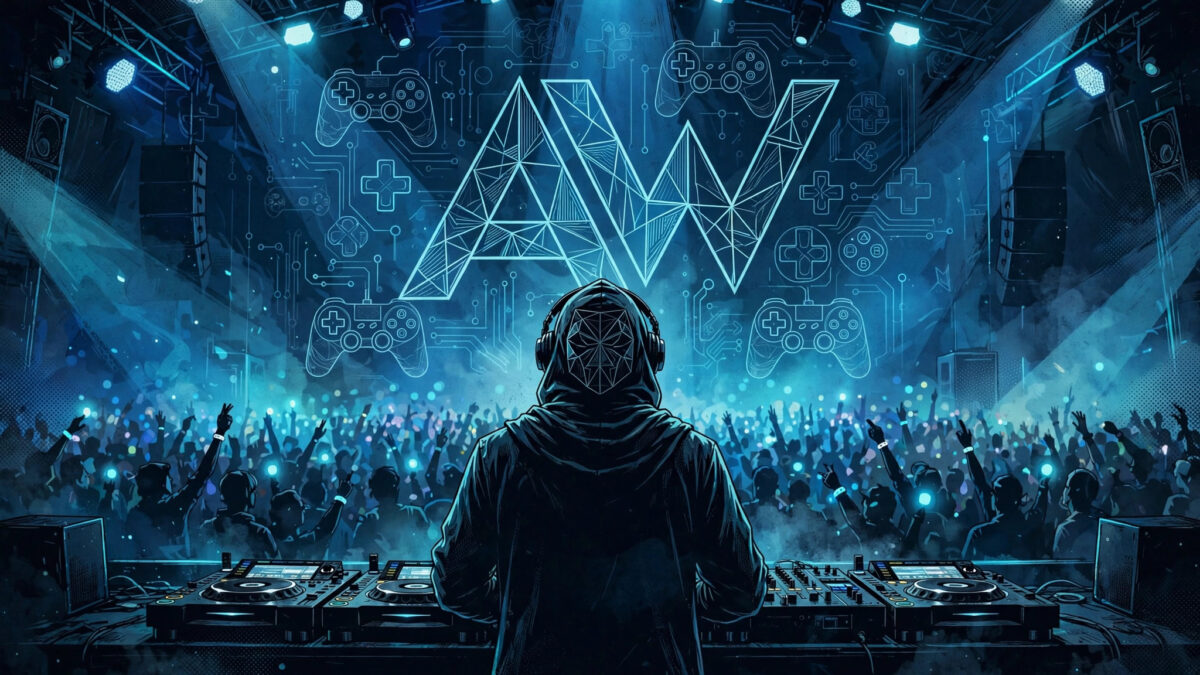
Every DJ needs a logo; Walker turned himself into one. After signing with Sony Music in 2015, the masked-and-hoodie identity was developed into a full concept: the face is hidden, the “AW” logo (designed by Walker himself back in 2013) is everywhere, and the fanbase was given a name — the Walkers. The brilliance of the mask is economic as much as artistic. Anonymity makes the brand portable: it survives line-up changes, guest vocalists, and the aging of its creator. It also made Walker’s merchandise behave more like a streetwear brand than a concert souvenir stand, with the logo-driven hoodies and apparel selling to fans who may never attend a show.
The mask also solved a problem most teenage stars face. Walker became famous before he was twenty. By keeping the person separate from the product, he protected the person — and kept the product endlessly scalable. Collaborators, from Iselin Solheim to Ava Max, could step into “Walker World” without diluting it.
Streaming: the engine room
The first pillar of Walker’s empire is the catalog. “Faded” remains one of the most-streamed songs of the streaming era, and his channel has grown into one of the most-subscribed music channels in the world, with tens of millions of subscribers and views measured in the tens of billions across “Faded,” “Alone,” “The Spectre,” and “Sing Me to Sleep.” In 2016 he signed a global publishing deal with Sony/ATV, meaning the songwriting income from the catalog is administered by one of the world’s largest publishers — a quiet but enormous source of recurring revenue that outlasts any tour cycle.
That catalog also behaves unusually well across markets. Walker’s music has found an outsized audience in Asia, particularly India, where he has become something close to a folk hero among young EDM fans. His recent collaborations reflect it: a track with Indian composer Pritam and singer Vishal Mishra, an official anthem for the Royal Challengers Bangalore cricket team, and music added to the Indian battle-royale game BGMI. When a fanbase spans that many time zones, the streaming engine runs around the clock.
Gaming: the second stage
Walker understood something early that most DJs still haven’t fully grasped: for his generation, games are the new radio. Long before brand partnerships with games became standard industry practice, he was weaving game aesthetics into his music, and in 2021 he formalized the relationship with a collaboration on new music for PUBG Mobile, one of the biggest games on the planet. His stated influences include not just producers like Tiësto, Kygo, and Avicii, but film composers such as Hans Zimmer and the soundtracks of games like The Legend of Zelda and Old School RuneScape.
This is not a side hobby. Gaming partnerships give Walker access to audiences that never visit a festival and never open Spotify’s electronic charts. They also fit the brand perfectly: a masked avatar who looks like he stepped out of a game world, making music for the worlds themselves. Each collaboration extends the Walkers community into places traditional music marketing cannot reach.
The Walkers: community as infrastructure
Walker has spoken about his “Walker World” as a community rather than an audience, telling interviewers that it is “about building a community where fans can connect and feel like part of something bigger.” That language is corporate, and deliberately so. A loyal, named fanbase lowers customer acquisition costs to near zero for every release, every tour date, every merch drop. Walker’s social media following runs into the tens of millions across platforms, and he actively engages that audience with live streams and interactive events. In an era when most artists rent their audiences from algorithms, Walker owns his.
Touring: the lean machine
The third pillar is the road. Unlike a stadium pop tour, a top-tier DJ’s touring economics run on flat guarantees rather than box-office splits, with a lean production — big screens, lighting, a small crew — that travels cheaply and sets up fast. Walker’s global festival calendar, from Asia to Europe to the Americas, generates consistent high-margin revenue without the enormous fixed costs of a traditional band. Add it to streaming, publishing, brand deals, and merchandise, and the picture of the business becomes clear: four or five revenue engines, all feeding the same brand.
Why the net worth question is so hard to answer
All of this explains why estimates of Walker’s fortune swing so wildly. A privately held, multi-revenue creative business leaves almost no public trail. There are no filings for the Walkers’ merch arm, no public breakdown of his Sony/ATV publishing income, and festival guarantees are closely guarded industry secrets. Norwegian media has occasionally reported on his company finances — one 2021 report noted a sharp dip in declared income, a reminder that even global stars have lumpy years, especially around the pandemic touring freeze.
What can be said with confidence is this: Walker built his empire the modern way. He started with zero gatekeepers, converted virality into ownership of his image, and diversified early into gaming and community infrastructure while his peers were still chasing radio. The mask hid a teenager; it revealed a businessman. Whatever the true number is in 2026, it was built on one of the smartest brand plays in pop music — and it all started in a Bergen bedroom with a laptop, a YouTube upload, and a face the world never had to see.
The Walker empire: a timeline
Alan Walker’s net worth in 2026 is the product of one of the smartest brand builds in electronic music — a masked identity, a gaming-native audience, and a community treated as infrastructure. Here is how it was assembled.
| Year | Milestone |
|---|---|
| 1997 | Alan Olav Walker is born on August 24 in Northampton, England; at age two his family moves to Bergen, Norway. He holds both British and Norwegian citizenship. |
| 2012 | He starts producing music on his laptop, teaching himself via YouTube tutorials and working in FL Studio. |
| 2014 | “Fade” is released through the NoCopyrightSounds (NCS) YouTube channel and becomes a word-of-mouth hit in the gaming community. |
| 2015 | “Faded” — the vocal version of “Fade” — is released in December and becomes a global phenomenon; he signs with Sony Music. |
| 2016 | “Sing Me to Sleep” and “Alone” consolidate his stardom; the mask-and-hoodie identity becomes one of music’s most recognisable brands. |
| 2018 | Debut studio album Different World is released in December. |
| 2019 | “On My Way” with Sabrina Carpenter and Farruko; major gaming collaborations including PUBG Mobile cement his second stage. |
| 2021 | World of Walker album; his YouTube audience grows into the tens of millions of subscribers. |
| 2022 | Walkerverse Pt. I & II; continued expansion across Asia, where he is among the biggest Western electronic acts. |
| 2023 | Walkerworld — released alongside an amusement-park-themed virtual world concept for fans. |
The empire in numbers
| Measure | Detail |
|---|---|
| “Faded” video views | The official music video has surpassed 3 billion YouTube views — among the most-watched music videos of all time. |
| Streaming scale | “Faded” alone counts billions of Spotify streams; his catalogue totals in the tens of billions across platforms. |
| YouTube community | The Walkers number in the tens of millions of subscribers — one of the largest artist channels in electronic music. |
| Net worth estimate (2026) | Third-party estimates vary widely but generally place Alan Walker’s net worth in the tens of millions of dollars, built from streaming, touring, gaming partnerships, and merchandise. |
| Touring | A lean, high-volume touring operation with particular strength in Asia — China, India, and Indonesia are among his biggest markets. |
| Merchandise | The Walker logo and mask iconography power a substantial merch business, sold to a young, identity-driven fanbase. |
What’s next for the Walker empire
Walker’s empire rests on two bets that keep paying off: that gaming culture and music culture would fully merge, and that a faceless brand could be more durable than a famous face. Both have proven correct. The Walkerworld concept points at the next phase — persistent virtual worlds and deeper fan-platform integration — while his touring machine continues to convert online scale into real-world revenue, especially across Asia. The mask, once a mystery, is now simply good business: anyone can wear it, which means the brand can outlive any single person wearing it.
FAQ
What is Alan Walker’s net worth in 2026?
Published third-party estimates generally place Alan Walker’s net worth in the tens of millions of US dollars, though figures vary widely and none are officially confirmed. His income comes from streaming royalties, touring, gaming partnerships, and merchandise.
What is Alan Walker’s real name?
Alan Olav Walker. He was born in Northampton, England, and moved to Bergen, Norway, at the age of two.
Is Alan Walker British or Norwegian?
Both — he holds British and Norwegian citizenship. He was born in England but raised in Bergen from early childhood and is generally counted among Norway’s music exports.
Why does Alan Walker wear a mask?
The mask and hoodie began as a statement that the music matters more than the person — “anyone can be a Walker.” It has since become one of the most valuable brand assets in electronic music, instantly recognisable worldwide.
What is Alan Walker’s biggest song?
“Faded” (2015), by an enormous margin — its music video has passed 3 billion YouTube views, making it one of the most-watched videos in YouTube history and the foundation of everything that followed.
Does Alan Walker still produce his own music?
Yes. He started as a self-taught bedroom producer working in FL Studio, learning from YouTube tutorials, and he remains closely involved in production — the DIY origin is central to the Walker brand story.
Sources & Further Reading
Read next: Alexander Rybak: Where Is He Now? The Eurovision Star’s Return | Ylvis: What Are They Doing Now? Life After ‘The Fox’