Casper Ruud’s Mission: Building Tennis Culture in Norway
Norway is a skiing country. Its sporting heroes win gold on snow — in cross-country, in biathlon, in ski jumping. Nobody expected a tennis champion to come out of Snarøya, a suburb of Oslo, in a nation with a short outdoor season and barely any tennis tradition. Then came Casper Ruud: world No. 2, three-time Grand Slam finalist, thirteen ATP titles, and the first Norwegian in history to contest a major final. His career is remarkable on its own. But Ruud’s deeper project is bigger than trophies: he is trying to build a tennis culture in a country that never had one.
The father who came first
To understand the mission, start with the father. Christian Ruud turned professional in 1991 and retired in 2001 with a career-high ranking of No. 39 — the highest-ranked Norwegian male tennis player in history, aside from the early-twentieth-century great Molla Mallory. Christian knew exactly how lonely the path was. “No one from Norway did anything before me,” he has said, “so I was just happy to get into the Top 100, then Top 50. Maybe I was happy with that, instead of dreaming a little bit bigger.”
His son dreamed bigger from the start. Casper picked up a racket at four, at the Snarøya tennis club near the family home, and by January 2016 he was the No. 1 junior in the world — the first Norwegian ever to hold that ranking. Christian coached him from childhood, stepped aside at one point, and then — at Casper’s own request — returned as his main coach. “Casper wanted me back,” Christian recalled. “I asked him if he wanted to look for some other coaches, and he said, ‘No, I want you to come back and be my coach.'” The father-son partnership, with Spaniard Pedro Clar also on the team, has carried Casper to heights his father never reached: a career-high of world No. 2 in September 2022 and finals at Roland-Garros in 2022 and 2023 and the US Open in 2022.
The Nadal academy years
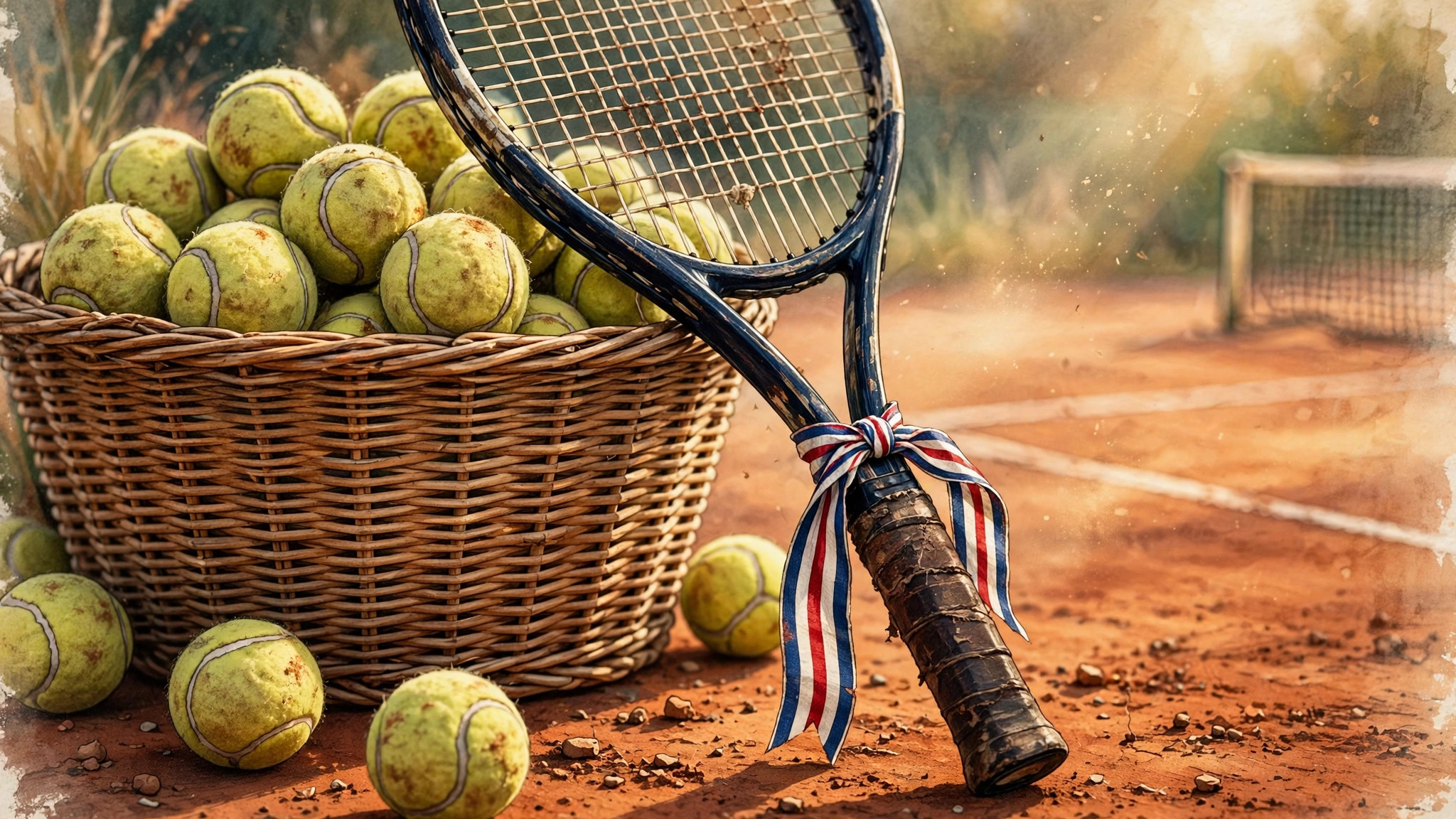
Every Norwegian tennis story runs through Spain, because Norway’s climate makes year-round outdoor training nearly impossible. In the fall of 2018, Ruud and his team began a collaboration with the Rafa Nadal Academy in Mallorca — the academy run by his childhood idol. Nadal was the player young Casper had watched on television, studying every final, and the academy gave him what Norway could not: red clay, endless sun, and daily proximity to the greatest clay-court player who ever lived.
The results were transformative. Ruud’s game — heavy topspin forehand, relentless baseline consistency, exceptional movement — is built for clay, and twelve of his thirteen ATP titles have come on the surface. His maiden Masters 1000 title, at the Madrid Open in 2025, confirmed him as the premier clay-courter of his generation after the retirements of the Big Three. The irony is rich: a Norwegian, from a country with almost no clay courts, became the heir to the Spanish clay tradition by going to its source.
But the academy years also taught him what a tennis culture looks like from the inside — the infrastructure, the daily sparring, the conveyor belt of juniors. He has seen the machine that produces champions. His mission is to build a version of it at home.
Staying Norwegian
One of the most striking things about Ruud is what he has not done. Unlike many top players, he does not live in Monaco or Dubai. He lives in Norway — in Oslo, near where he grew up — despite the country’s famously high taxes. “Having my family nearby, living in Norway, staying connected to my homeland — that gives me stability,” he has said. “Tennis can be very intense and lonely at times, so I recharge at home. That is more valuable to me than any tax benefit.”
The decision is the foundation of the mission. You cannot build a tennis culture in Norway from a tax haven. Ruud trains at home, is visible at home, and invests his presence in Norwegian tennis. During the off-season he has visited his old primary school in Snarøya, running tennis clinics for kids and preaching an anti-bullying message — the world No. 2 coming home to hit balls with children. He has spoken warmly about Norway’s Olympic training center, where athletes from different sports train side by side: “It’s almost like we’re training together in a way even though we’re all doing separate sports, and it’s really motivating.” He sees himself as part of a golden generation of Norwegian athletes — Warholm, Ingebrigtsen, Haaland, Ødegaard, Hovland — and he wants tennis to belong in that company permanently.
What building the culture actually means
Ruud’s project has several fronts. The first is proof of concept: his own career demonstrates to every Norwegian kid with a racket that the path exists. Before him, the ceiling was his father’s No. 39. Now the ceiling is No. 2 and Grand Slam finals. That changes what a talented twelve-year-old in Bergen or Trondheim believes is possible.
The second is infrastructure and attention. Tennis in Norway has always fought for facilities, funding, and media oxygen against the winter sports. Ruud’s success has forced the conversation: his deep runs at Roland-Garros are national news, his face is on sponsors’ billboards, and junior participation has a hero to point to. The Rafa Nadal Academy chapter of his career is itself a lesson he brings home — what elite daily training environments look like, and what Norway would need to keep its best juniors from having to leave.
The third is temperament. Ruud is famously composed, humble, and sportsmanlike — the anti-villain of the ATP Tour. In a 2026 interview he reflected on what he had learned from three lost Grand Slam finals: to stay healthy, stay competitive, and trust the daily work. That ethos — process over tantrum, steadiness over drama — is exactly the culture he wants Norwegian tennis to inherit.
The unfinished business
The Grand Slam title still eludes him. Three finals, three defeats — to Nadal in Paris in 2022, to Carlos Alcaraz in New York later that year, to Novak Djokovic in Paris in 2023. Each loss came against an all-time great; each one taught him something. “I think I surprised myself,” he said after the 2022 season that took him to No. 2. The Madrid Masters title in 2025 was the biggest of his career and a reminder that his peak may still be ahead of him.
But even if the major never comes, the mission is already succeeding. There is a generation of Norwegian children now growing up with a tennis hero of their own — not an imported star on television, but a kid from Snarøya who stayed home, worked with his dad, and reached the top of the sport. Christian Ruud once wondered why a kid from Norway couldn’t become one of the best players in the world. His son answered the question. Now he is making sure he is not the last one to ask it.
The Ruud milestones: from Oslo to world No. 2
No Norwegian had ever done any of this before. The step-by-step construction of a tennis nation, one milestone at a time:
| Year | Milestone |
|---|---|
| 1998 | Born in Oslo. His father Christian retires in 2001 with a career-high ranking of No. 39 — the ceiling of Norwegian tennis. |
| 2018 | Begins a training base at the Rafa Nadal Academy in Mallorca, the academy of his childhood idol, solving Norway’s climate problem. |
| 2020 | Wins his first ATP title in Buenos Aires — the first Norwegian ATP titlist in history. |
| 2021 | Wins five ATP titles in a single season, announcing himself as a fixture of the tour’s elite. |
| 2022 | Reaches the French Open final (lost to Nadal) and the US Open final (lost to Alcaraz); climbs to a career-high world No. 2. |
| 2023 | Reaches the French Open final again (lost to Djokovic). |
| 2024 | Titles in Barcelona and Geneva; runner-up at Monte-Carlo. |
| 2025 | Wins the Madrid Open — his first Masters 1000 title and the biggest of his career. |
Norwegian tennis: the landscape Ruud is changing
To understand the mission, consider what Norwegian tennis looked like before him. It was a winter-sport nation where tennis fought for indoor courts, funding, and media oxygen against skiing in all its forms. The historical ceiling was his father’s No. 39. No Norwegian man had reached a Grand Slam final, let alone won a Masters title. Davis Cup campaigns were brave but peripheral.
Ruud changed the belief structure first. Every deep run in Paris or New York was broadcast proof to a twelve-year-old in Bergen or Trondheim that the path exists — that a kid from Oslo can stand across the net from Nadal, Alcaraz, and Djokovic with a chance. Then came the harder part: the infrastructure conversation. Tennis in Norway has always lacked the year-round facilities of Spain or France, and Ruud’s success forced the question into the open — what would it take to produce the next one at home, rather than exporting every prospect to Mallorca?
Junior participation figures have reportedly surged on the back of his success, and his decision to stay based in Oslo — paying Norwegian taxes, training at home, living near family — turned the mission from a slogan into a lived example. The Grand Slam title remains the unfinished business. But win or lose, the culture is already under construction.
FAQ: Casper Ruud and tennis in Norway
Is Casper Ruud the best Norwegian tennis player ever?
By every objective measure — career-high No. 2, three Grand Slam finals, a Masters 1000 title, a dozen-plus ATP titles — yes. Before him, the benchmark was his father Christian’s No. 39.
Where does Casper Ruud train?
He is based in Oslo, near where he grew up, and has trained at the Rafa Nadal Academy in Mallorca since 2018 — the combination that solved Norway’s lack of year-round outdoor courts.
Has Casper Ruud won a Grand Slam?
Not yet. He has reached three finals — the French Open in 2022 and 2023, and the US Open in 2022 — losing each time to an all-time great: Nadal, Alcaraz, and Djokovic.
Why doesn’t Casper Ruud live in Monaco like other players?
By choice. He has said that having family nearby and staying connected to Norway gives him stability that outweighs any tax benefit — and that you cannot build a tennis culture in a country you have left.
What is Ruud doing to build tennis in Norway?
Two things: proof of concept — his own career shows Norwegian juniors the path exists — and pressure for infrastructure, forcing a national conversation about courts, funding, and coaching that the sport never had before him.
Who was Norway’s best player before Casper Ruud?
His father, Christian Ruud, who reached No. 39 in the world — aside from the early-twentieth-century great Molla Mallory, the only Norwegian name in the sport’s history books.
Sources & Further Reading
Read next: Viktor Hovland’s Swing Gamble: The Search for Lost Form | Caroline Graham Hansen: The Comeback Engine of Barcelona