

Mol & Sørum: Beach Volleyball’s Norwegian Vikings
A Quick Guide to the Sport
Before the story, the sport — because beach volleyball remains a mystery to many of the people who will end up loving it. Two players per side, no substitutions, on a sand court slightly smaller than the indoor game. Matches are best of three sets, played to 21 points (the decider to 15), and you must win by two. There is no coaching during play. The same two athletes must block, dig, set and spike — every rally is a test of the partnership as much as of either individual. It is volleyball stripped to its essence: sun, sand, and two people who have to trust each other completely.
Norway was never supposed to be good at this. Beach volleyball is a sport of California, Brazil and Australia — warm-weather cultures with year-round sand. Norway has fjords, not beaches, and a volleyball tradition measured in decades, not generations. Which is what makes the story of Anders Mol and Christian Sørum — Olympic champions, world number ones, the youngest pair ever to win beach volleyball gold — one of the great improbabilities in Olympic history.
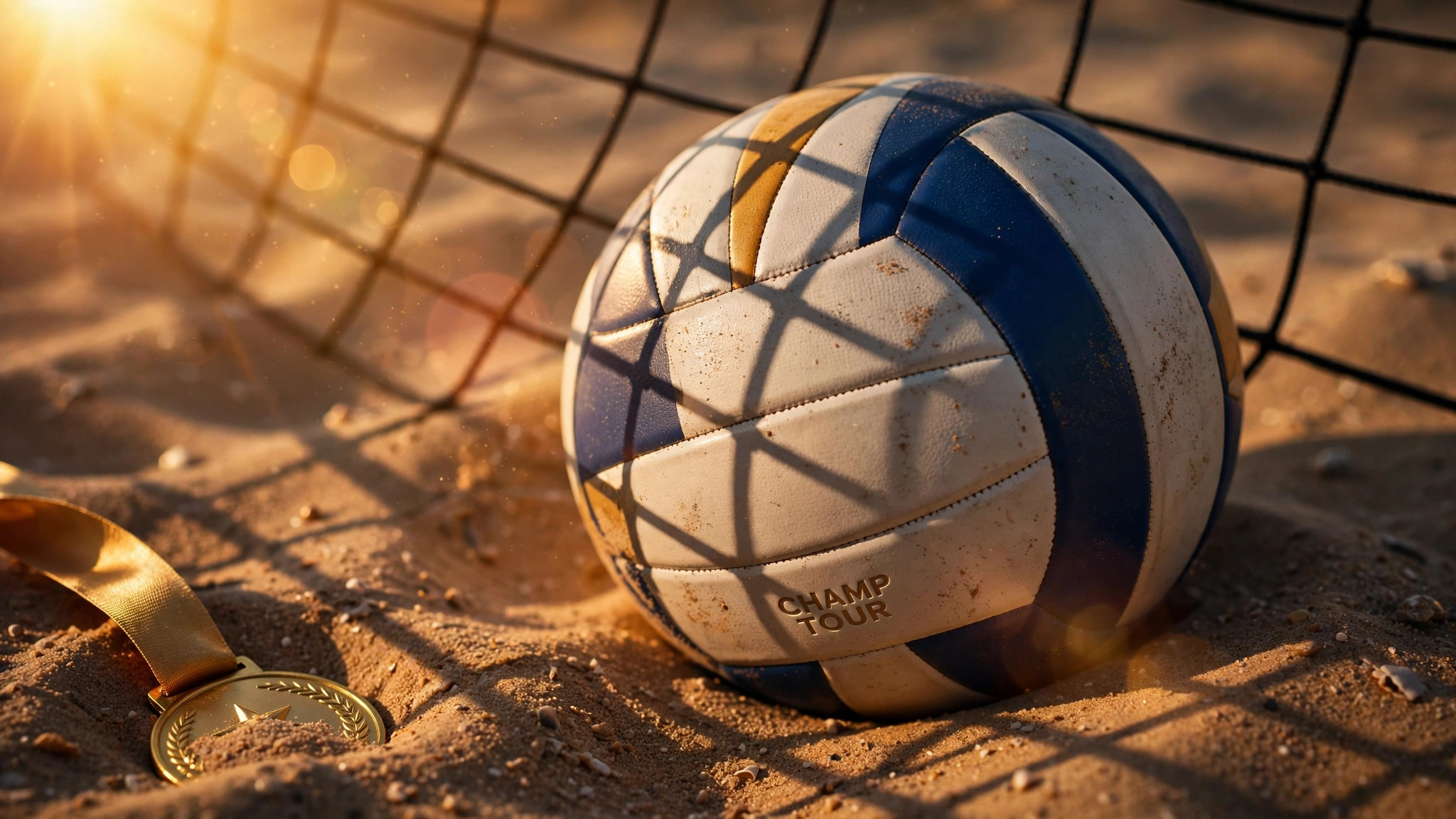
The Family Business
Anders Mol was born into the sport. His mother, Merita Berntsen, is a 1996 Olympian who competed at the Atlanta Games; his father, Kåre Mol, coached her there and would go on to coach his son’s team as well. Beach volleyball in the Mol household was not a hobby but a family trade. Anders learned the game as a teenager, introduced to it by his parents, and the family’s involvement runs deeper than one player: his brother Hendrik played at a high level too — in fact, Christian Sørum played alongside Hendrik before he ever partnered with Anders.
It is worth pausing on that detail, because it captures how small and tightly woven the Norwegian beach volleyball world was. This was not a talent pipeline or an academy system. It was a family, a few friends, and a father-coach in Strandvik, western Norway, building something from almost nothing. Kåre Mol was named the world’s best beach volleyball coach in 2019 — recognition that the experiment in the far north was producing results the sport’s traditional powers could not ignore.
The Partnership
Mol’s early career was a tour of junior partnerships: with Martin Olimstad at the Under-18 Europeans, then with his cousin Mathias Berntsen from 2014 to 2017 — a pairing that won the Under-20 European Championship in 2015 and took Under-22 silver in 2017. In 2016 he also won the U20 European title alongside Alexander Sørum. Then, at the end of 2016, came the partnership that changed everything: Anders Mol and Christian Sørum, Alexander’s brother.
The rise was startlingly fast. In 2017 they were named the World Tour’s best newcomers. In July 2018 they became European champions in the Netherlands. Then they won the five-star tournament in Vienna, climbed to the top of the world rankings on the back of nineteen consecutive victories, and closed the season by winning the World Tour Final in Hamburg — their fourth straight FIVB gold and the largest prize payout in the sport’s history. Mol finished that season with four individual FIVB awards: Best Blocker, Best Offensive Player, Most Outstanding Player and Most Improved. He was 21. The Vikings had arrived.
Tokyo: The Youngest Champions Ever
The Tokyo Olympics, held in 2021 after the pandemic delay, were the coronation. Seeded number one, Mol (24) and Sørum (25) became the youngest pair ever to win Olympic beach volleyball gold, defeating the reigning world champions — Viacheslav Krasilnikov and Oleg Stoyanovskiy of the Russian Olympic Committee — 21-17, 21-18 in the final, played in intermittent rain at Shiokaze Park. They dropped only two sets in the entire tournament.
Afterward, Mol spoke about the family dimension of the achievement. His first goal for the tournament, he admitted, had been a top-eight finish — which would already have been the best Olympic result in Norwegian history, one place better than his mother’s ninth in Atlanta. “I always dreamed of beating my mom in the Olympics,” he said. He had done considerably better than that. His father, who had coached both generations, called it “only the beginning.”
Paris and Beyond
The road to a second Olympics was rougher. In the buildup to Paris 2024, Mol suffered a broken bone in his lower leg at a training camp in Tenerife and underwent surgery, spending a minimum of six weeks on the sidelines with an internal splint he would carry into the Games. The preparation was compromised; the medal was not. In Paris, under the Eiffel Tower, Mol and Sørum took bronze — beating Qatar’s Cherif Younousse and Ahmed Tijan in straight sets — becoming one of the rare pairs to medal at consecutive Olympics.
The bronze confirmed what Tokyo had suggested: this was not a one-tournament wonder but a genuine era. A decade after a father-coach started training his kids on Norwegian sand, the family business had produced an Olympic gold, an Olympic bronze, a European title and a stretch as the undisputed best team in the world.
Why It Matters
The Mol-Sørum story is about more than medals. It is proof that a sport’s geography is not destiny — that with the right partnership, the right coaching and an almost unreasonable belief, a country with no beach volleyball tradition can conquer the sand. In a sport where the partnership is everything, theirs was built on something deeper than tactics: years of shared history, a family woven into the team, and a trust forged long before the world was watching.
Two players, no substitutions, no coaching during play. Just Mol and Sørum, and the sand. It turned out to be enough.
Mol and Sørum: Career Timeline
From a family experiment on Norwegian sand to the Olympic podium — the rise took barely five years:
| Year | Milestone |
|---|---|
| 2016 | Mol and Sørum team up (Sørum had previously partnered Mol’s brother Hendrik) |
| 2017 | Named the FIVB World Tour’s best newcomers |
| 2018 | European champions (Netherlands); five-star victory in Vienna; 19 straight wins; world No. 1; World Tour Final winners in Hamburg; Mol collects four individual FIVB awards |
| 2019 | World champions in Hamburg; Kåre Mol named the world’s best beach volleyball coach |
| 2021 | Olympic gold in Tokyo — the youngest pair ever to win beach volleyball gold; only two sets dropped all tournament |
| 2024 | Mol fractures a leg at a Tenerife training camp and has surgery; the pair regroups to win Olympic bronze in Paris |
The Viking Playbook: Key Facts
- The ages. Mol was born in 1997, Sørum in 1995 — 24 and 25 at the Tokyo final, making them the youngest Olympic beach volleyball champions in history.
- The roles. Mol is the dominant blocker; Sørum the defensive anchor — a division of labor built over years of playing together, not assigned by a system.
- The family firm. Mother Merita Berntsen (Atlanta 1996, 9th place), father-coach Kåre Mol (world’s best coach, 2019), brother Hendrik a former partner of Sørum — the team is quite literally a family business.
- The final. Tokyo: 21-17, 21-18 over Russia’s Krasilnikov and Stoyanovskiy, the reigning world champions, in intermittent rain at Shiokaze Park.
- The repeat. Paris 2024: straight-sets bronze over Qatar’s Cherif Younousse and Ahmed Tijan under the Eiffel Tower — medaling at consecutive Olympics, a feat few beach pairs manage.
- The geography. Norway has no beach volleyball tradition to speak of; Mol and Sørum’s gold was the country’s first Olympic medal in the sport — proof that a sport’s geography is not destiny.
What’s Next: The Road to Los Angeles
Beach volleyball rewards longevity — the best pairs often peak in their late twenties and early thirties — which puts Mol (born 1997) and Sørum (born 1995) squarely in their prime for the LA 2028 Games. The anders mol christian sorum beach volleyball story is no longer about a surprise breakthrough; it is about whether a second Olympic gold is achievable. Nothing has been announced either way, and the grind of the world tour — plus Mol’s 2024 leg injury — will shape the answer. But pairs that medal at two straight Olympics don’t usually walk away from a third.
FAQ
Are Anders Mol and Christian Sørum brothers?
No — but the family tree is tangled. Sørum’s brother Alexander was once Mol’s partner; Mol’s brother Hendrik once partnered Sørum. Mol and Sørum are teammates from western Norway, bound by years of shared history rather than blood.
Who coaches Mol and Sørum?
Kåre Mol — Anders’ father, who also coached Anders’ mother Merita Berntsen at the 1996 Atlanta Olympics. He was named the world’s best beach volleyball coach in 2019.
Why is the Mol family famous in volleyball?
Merita Berntsen competed at Atlanta 1996 (9th place), Kåre coached her there, and sons Anders and Hendrik both played at a high level. Beach volleyball in the Mol household was a family trade long before it was a medal factory.
What happened to Anders Mol before the Paris Olympics?
He broke a bone in his lower leg at a training camp in Tenerife and underwent surgery, spending at least six weeks sidelined with an internal splint. Preparation was compromised — but the pair still took bronze in Paris.
Where do Mol and Sørum train?
Their base is in western Norway, with regular training camps in warmer locations such as Tenerife — one way a northern team manufactures the year-round sand its rivals take for granted.
Will they compete at the Los Angeles 2028 Olympics?
No announcement has been made, but their ages (early thirties by 2028) suit the sport’s peak window, and consecutive Olympic medals suggest unfinished business. Expect the world tour to be the testing ground.
Sources & Further Reading
Read next: Henny Reistad: The Generational Talent Redefining Handball | Martin Ødegaard’s Quiet Leadership: How Arsenal’s Captain Leads