
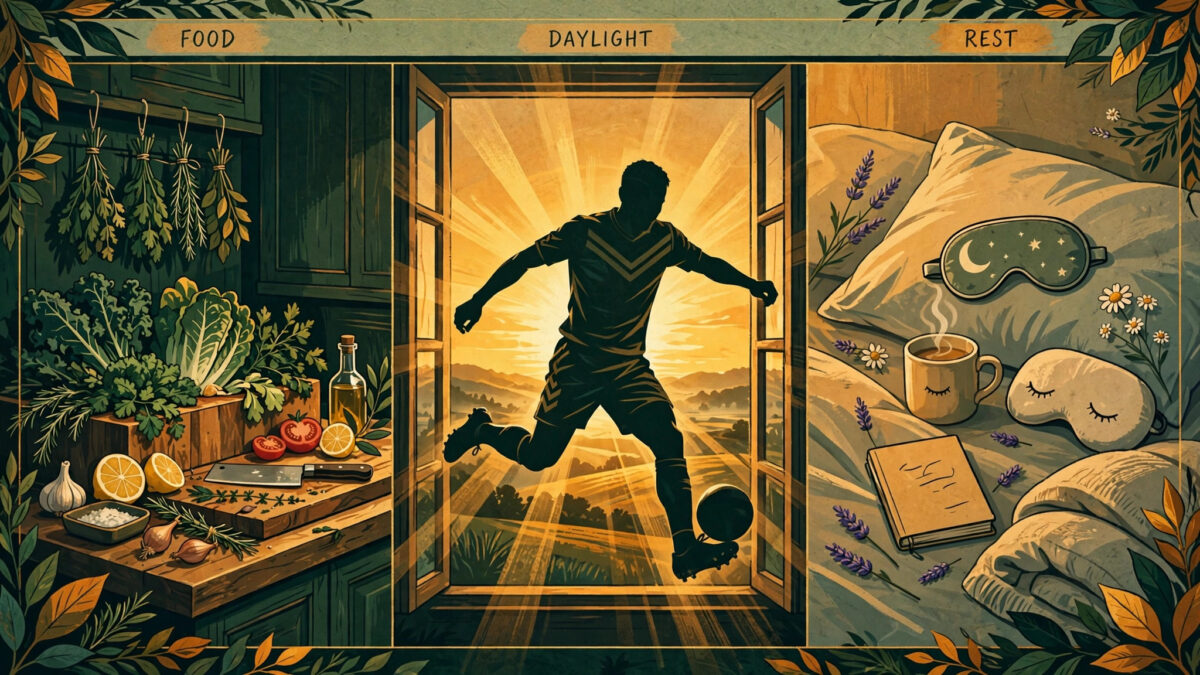
What Does Erling Haaland Eat? Inside the Diet Behind the Machine
Erling Haaland scores goals the way most people breathe — constantly, and without visible effort. Behind the Manchester City striker’s freakish output sits one of the most talked-about diets in world football: roughly 6,000 calories a day, built around principles he laid out himself in a Norwegian documentary. Cow’s heart. Cow’s liver. Filtered water. Morning sunlight. A lasagne made by his dad. This is what Erling Haaland actually eats — and why.
“I eat the heart and the liver”
The most famous lines about Haaland’s diet come straight from his own mouth. In the documentary Haaland: The Big Decision, filmed before his move to Manchester City, an interviewer shows him huge cuts of cow’s heart and liver from his butcher and asks if this is what he eats. Haaland’s answer became instant legend:
“You [other people] don’t eat this, but I am concerned with taking care of my body. I think eating quality food that is as local as possible is the most important. People say meat is bad for you but which? The meat you get at McDonald’s? Or the local cow eating grass right over there? I eat the heart and the liver.”
It sounds like a stunt, but the logic is old-fashioned Norwegian practicality. Organ meats — offal — are among the most nutrient-dense foods on earth. Liver is loaded with iron and vitamins A, B12, and D; heart is high in protein and iron while being leaner than most steaks. Dietitians who have commented on his diet note that offal is “often overlooked” but genuinely useful for muscle maintenance and recovery — exactly what a striker playing twice a week needs. Haaland’s philosophy is less about biohacking than about provenance: eat real food, from nearby, and don’t overthink it.
6,000 calories a day: eating like a bear
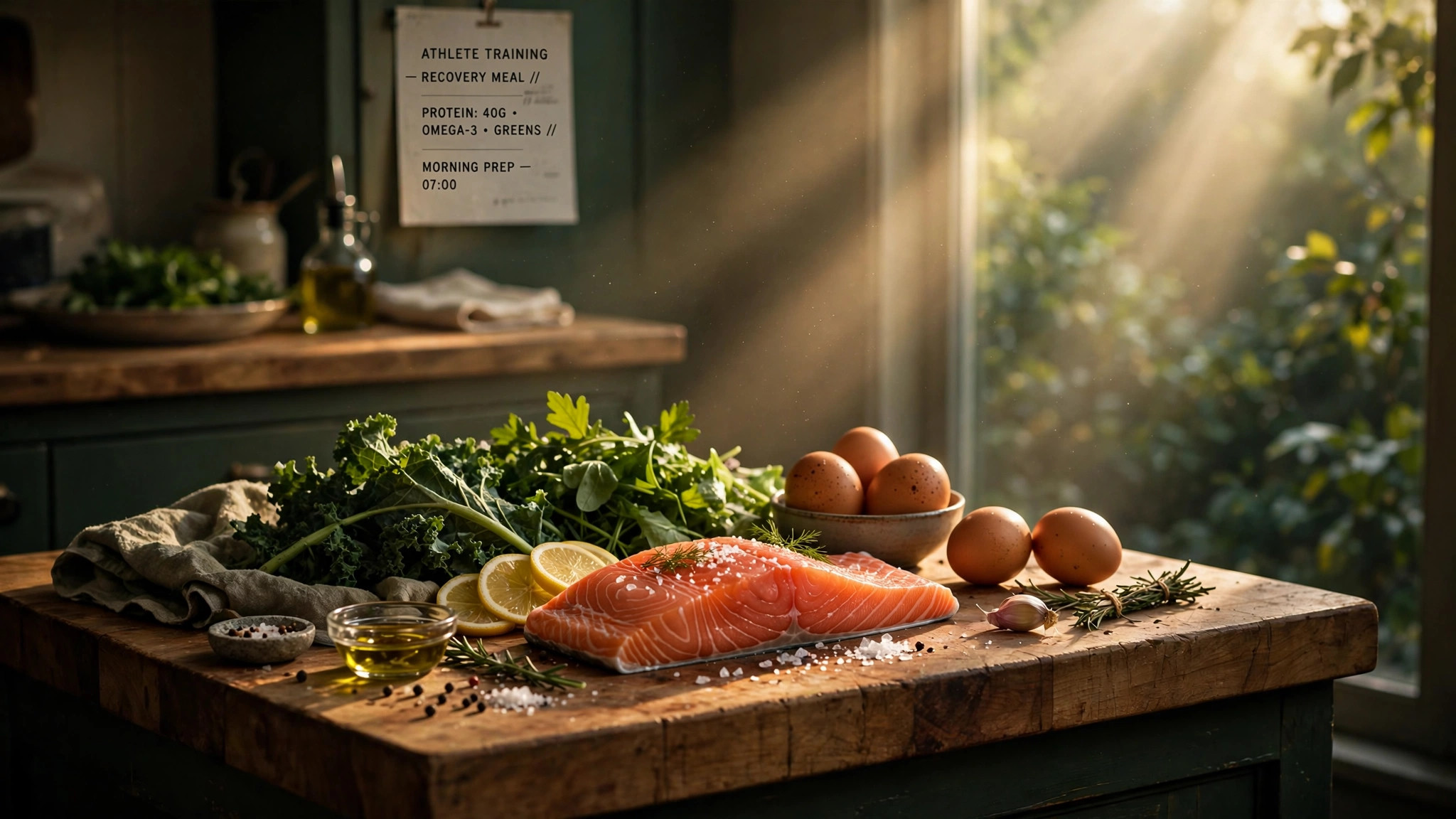
Teammates have described Haaland as “eating like a bear,” and the numbers back them up. He consumes around 6,000 calories daily — roughly two and a half times what an average man needs. For a 6’4″ athlete built like a sprinter who plays 90 minutes of high-intensity football, that is fuel, not indulgence. The calories power a body that has to sprint, jump, wrestle center-backs, and recover within 72 hours, week after week.
What fills those calories beyond the famous organ meats is less exotic than the headlines suggest. His favorite meal is reportedly a lasagne cooked by his father, Alf-Inge — the former Leeds and Manchester City footballer whose own career shaped his son’s. There is something fitting about that: the most feared striker in Europe, fueled by his dad’s cooking. It also hints at the deeper story of the diet, which is really a story about family.
The Alf-Inge influence
Born in Leeds in 2000 while his father was playing in England, Haaland is Norwegian through and through — a Norway international raised in Bryne, a small town on Norway’s southwest coast. His father played professionally for over a decade, and the household understood elite sport from the inside. That background shows in Haaland’s approach to food: it is treated as discipline, not pleasure-seeking. The local-food philosophy, the suspicion of processed food, the almost farm-to-table framing of a grass-fed cow “right over there” — this is the Bryne upbringing talking, filtered through a modern athlete’s resources.
Norwegian food culture has always had a practical, nose-to-tail streak, born of long winters and farming communities where nothing was wasted. Haaland’s heart-and-liver habit reads less like an influencer trend and more like a very old Norwegian idea, scaled up to superhuman calorie counts.
Water, sunlight, and the morning ritual
The diet is only half the story. In the same documentary, Haaland described the rest of his daily machinery with the same earnestness:
“The first thing I do in the morning is to get some sunlight in my eyes — it is good for circadian rhythm. I have also started to filtrate my water a bit. I think it can have great benefits for my body.”
He drinks water through a complex filtration system rather than straight from the tap, and he treats light exposure as seriously as protein intake. It is the same principle as the food: control the inputs, and the outputs take care of themselves.
Sleep: the real performance enhancer
If you ask Haaland what matters most, the answer is not the liver. It is sleep. He has repeatedly called sleep the single most important factor in his performance, targeting a staggering 10 to 11 hours of rest per day, including a disciplined afternoon nap. Three hours before bed, he wears blue-light-blocking glasses to trigger natural melatonin production. He tapes his mouth shut to force nasal breathing during the night, switches off all electronic devices, and takes ice baths as part of the recovery routine.
Sports scientists would recognize the whole package: circadian discipline, nasal breathing for better oxygen efficiency and heart-rate variability during deep sleep, cold exposure for recovery. Haaland did not invent any of it. He just does all of it, every day, with the same relentlessness he brings to finishing chances.
Why it works — and why you shouldn’t copy it
None of this is a recommendation. A 6,000-calorie organ-meat diet is designed for a genetically gifted 25-year-old athlete burning thousands of calories per match, monitored by one of the best sports-science departments in football. What is worth taking from Haaland’s approach is the underlying philosophy, stated in his own words: care about what goes into your body, prefer local and unprocessed food, and treat sleep as training.
The diet stories will keep generating headlines — every interview seems to add a detail — but the real story is simpler. Erling Haaland eats like someone raised by a footballer in a small Norwegian town: big portions, real food, no shortcuts. The heart and the liver are just the most photogenic part of a much bigger machine. The machine itself runs on discipline, daylight, and an almost absurd amount of sleep — and on Saturday afternoons, it runs at defenders.
A day of eating like Haaland
What does Erling Haaland eat? The fullest answer comes from the man himself — in interviews and in the 2022 documentary Haaland: The Big Decision, where cameras followed him into his kitchen. The picture is less exotic than the headlines suggest, and more disciplined.
| When | What he eats — in his own telling |
|---|---|
| Morning | He has described starting the day with water and sunlight — he is serious about circadian rhythm, and breakfast is built around eggs and whole foods rather than anything processed. |
| Lunch | Chicken and pasta feature heavily: simple, high-protein, high-carbohydrate fuel for double training sessions. |
| Pre-match (home games) | The famous one: lasagne, cooked by his father Alf-Inge. Haaland has said he eats his dad’s lasagne before every home game — a ritual as much as a meal. |
| The offal | In the documentary he is filmed eating heart and liver, explaining that he believes in eating the whole animal for its nutrients: “You [other people] don’t eat this, but I am concerned with taking care of my body.” |
| Dinner | Steak or other quality meat with vegetables — unbreaded, unfried, and enormous in portion. |
| Drinks | Water, and lots of it. He has said he avoids alcohol and sugary drinks; his hydration is as planned as his meals. |
| Total | He has put the figure at roughly 6,000 calories a day — the intake of an endurance athlete, because his training and match load demands it. |
The Haaland diet in numbers
| Measure | Detail |
|---|---|
| Daily calories | Around 6,000 — his own reported figure, roughly double a typical adult male intake. |
| Height / playing weight | 1.94 m and roughly 88–90 kg of lean muscle — the frame the calories are built to maintain. |
| Top speed | Reported at over 36 km/h — remarkable for a striker of his size, and a direct product of power-to-weight conditioning. |
| Protein emphasis | Every meal centres on quality protein — meat, eggs, fish — with organ meats as his much-discussed supplement. |
| Alcohol | He has said he does not drink alcohol, treating recovery as non-negotiable. |
| Sleep kit | Blue-light glasses in the evening and mouth tape at night — shown in the documentary as part of his sleep optimisation. |
Why it works — for him
The logic of Haaland’s diet is inseparable from his workload: two training sessions a day plus matches means his body burns through fuel that would make an ordinary person ill. The heart-and-liver habit is the headline, but the real story is boring consistency — the same whole foods, the same pre-match lasagne, the same water, no alcohol, and sleep treated like training. Sports scientists would add the obvious caveat: 6,000 calories is a prescription for a 1.94 m elite athlete, not a lifestyle template. What is transferable is the principle — eat whole foods, prioritise protein, hydrate, sleep — which is exactly what the world’s most feared striker does, every single day.
FAQ
What does Erling Haaland eat in a day?
By his own account: eggs and whole foods for breakfast, chicken and pasta for lunch, large meat-and-vegetable dinners, his father’s lasagne before home games, and organ meats — heart and liver — as shown in his documentary. He reports eating around 6,000 calories daily.
Does Erling Haaland really eat 6,000 calories a day?
That is the figure he has given himself. For a 1.94 m striker training twice a day and playing twice a week, sports nutritionists consider that plausible — his energy expenditure is enormous. It is not a target for anyone with a normal training load.
What is the Haaland lasagne story?
Haaland has said his father, former footballer Alf-Inge Haaland, cooks lasagne for him before every home game. It is part pre-match fuel, part family ritual — and it has become one of the most quoted details of his diet.
Why does Haaland eat heart and liver?
In the documentary Haaland: The Big Decision he is filmed eating heart and liver, saying he wants to “take care of my body” and believes in eating the whole animal. Organ meats are extremely nutrient-dense — rich in iron, B12, and vitamin A — which fits his whole-food philosophy.
Does Erling Haaland drink alcohol?
He has said he avoids alcohol, along with sugary drinks and junk food. His approach treats recovery — sleep, hydration, nutrition — as part of the job, not an optional extra.
Can I copy Erling Haaland’s diet?
The principles — whole foods, plenty of protein, no alcohol, good sleep — are sound for anyone. The 6,000-calorie quantity is not: it is calibrated to an elite athlete’s workload, and copying the portions without the training would simply mean weight gain. This article is general information, not dietary advice.
Sources & Further Reading
Read next: Karsten Warholm’s Training: Inside the Ulsteinvik Method | Ada Hegerberg’s Boycott That Changed Women’s Football
Read next: Cristiano Ronaldo at 981: The 19 Goals Between Him and 1,000
Read next: Lionel Messi’s Last Night in Blue and White: Inside the Farewell at the Monumental