How AI and Machine Learning Are Changing Modern Mining
The mining industry has long been the backbone of industrial progress, unearthing the essential raw materials that build our world. For centuries, this industry relied on heavy machinery, manual labor, and a good deal of geological intuition. While these methods have served us well, a new technological revolution is underway, digging deeper and smarter than ever before. Artificial intelligence (AI) and machine learning (ML) are quietly transforming every facet of modern mining, ushering in an era of unprecedented efficiency, safety, and sustainability.
This isn’t just about adding a few new software programs. It’s a fundamental shift in how mining operations are planned, executed, and managed. By harnessing the power of data, AI is helping companies see beneath the earth’s surface with greater clarity and operate with a precision that was once unimaginable.
A Smarter Approach to Exploration
Finding valuable mineral deposits is a high-stakes endeavor, often involving costly and time-consuming exploratory drilling. AI and machine learning are changing the odds by turning geological exploration from a game of probability into a science of prediction.
Predictive Mapping and Resource Discovery
Geologists and data scientists can now feed vast amounts of historical data into sophisticated ML models. This data includes everything from satellite imagery and seismic surveys to soil samples and historical drilling results. The algorithms analyze these complex datasets to identify patterns that are invisible to the human eye.
The result is predictive mapping that highlights areas with a high probability of containing valuable ore bodies. This allows exploration teams to focus their efforts and resources more effectively, significantly reducing the cost and environmental footprint of discovery. Instead of drilling based on educated guesses, companies can now target locations with data-driven confidence.
Revolutionizing Extraction and Operations
Once a deposit is found, the real work begins. AI is optimizing the entire extraction process, from the first blast to the final processing, making operations more efficient and productive.
Autonomous Haulage and Drilling
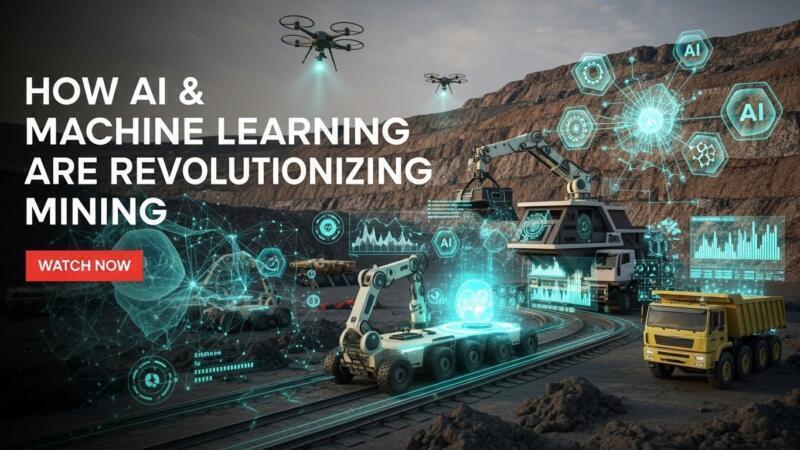
Some of the most visible applications of AI in mining are autonomous vehicles. Massive haul trucks, drills, and trains now navigate complex mine sites without a human driver. Guided by GPS, LiDAR, and advanced sensors, these autonomous systems operate around the clock with remarkable precision.
The benefits are numerous. Autonomous trucks can run for longer periods without breaks, follow optimal routes to save fuel, and reduce wear and tear on equipment. This not only boosts productivity but also removes human operators from potentially hazardous environments, marking a significant step forward in operational safety.
Process Optimization
Inside the processing plant, AI algorithms monitor thousands of data points in real-time. They track variables like ore grade, crusher performance, water usage, and energy consumption. By analyzing this constant stream of information, machine learning models can make subtle adjustments to the machinery to maximize output and efficiency. For example, an AI system might adjust the speed of a conveyor belt or the settings on a grinding mill to ensure the ore is processed under optimal conditions, leading to higher recovery rates and less waste.
A New Standard for Worker Safety
Mining has always carried inherent risks, but AI is creating a safer work environment for everyone on site. The technology acts as a vigilant co-pilot, constantly monitoring for potential dangers.
Proactive Hazard Detection
Smart sensors and cameras equipped with AI-powered computer vision are being deployed throughout mine sites. These systems can monitor for geological instability in tunnel walls, detect harmful gases, and track the movement of people and equipment in real-time. If a system detects a potential rockfall or a worker straying into a restricted area, it can trigger an immediate alert, allowing for preventative action before an accident occurs.
Predictive Maintenance
Equipment failure is not just costly; it can also be dangerous. AI-driven predictive maintenance systems analyze data from sensors on heavy machinery to predict when a part is likely to fail. Instead of waiting for a breakdown, maintenance teams can schedule repairs proactively during planned downtime. This prevents unexpected and potentially catastrophic equipment failures, keeping operations running smoothly and safely.
Mining with a Conscience: Sustainability and Environmental Management
The mining industry faces increasing pressure to minimize its environmental impact. AI provides the tools to operate more sustainably and responsibly, helping companies meet and exceed regulatory standards.
Reducing Energy and Water Consumption
AI models can optimize energy usage across an entire mining operation, from ventilation systems to processing plants. By identifying inefficiencies and adjusting power consumption in real-time, mines can significantly reduce their carbon footprint. Similarly, AI helps manage water, a precious resource in many mining regions. Smart systems monitor water usage and quality, enabling recycling and reducing the overall consumption needed for mineral processing.
Tailings Dam Monitoring
The stability of tailings dams—structures used to store mining byproducts—is a critical environmental and safety concern. AI-powered sensors and satellite imagery can monitor these dams for tiny movements or changes in pressure that could indicate instability. This continuous, automated monitoring provides an early warning system that helps prevent catastrophic failures.
The Road Ahead
The integration of AI and machine learning in the mining industry is not a distant future; it’s happening now. From the initial search for minerals to the final stages of processing and environmental reclamation, data-driven intelligence is making mining smarter, safer, and more sustainable. As this technology continues to evolve, we can expect to see even more innovative applications that will further redefine what’s possible, ensuring the industry can continue to supply the world’s needs while protecting its people and the planet.